Spring Wildlife on Scotland’s West Coast
Spring Wildlife on Scotland's West Coast: April Around Mull, Islay, Colonsay, Oronsay and Jura
April is one of the most rewarding months to experience wildlife on Scotland’s west coast. The long days return, Atlantic light softens the landscape, and islands such as Mull, Islay, Colonsay, Oronsay and Jura come alive with breeding birds, fresh greenery and charismatic mammals. It’s a season of movement, display and renewal.
Eagles and other Raptors: Lords of the Spring Skies
April is peak time for raptors. Both Golden Eagles and White-tailed Eagles are firmly into their breeding season. Golden Eagles, more tied to the uplands of Mull and Jura, but also along sea cliffs are without doubt impressive birds. Look for high circling and dramatic undulating display flights where birds close their wings and stoop at enormous speed towards the ground as pairs reinforce bonds and defend territories. White-tailed Eagles, increasingly widespread across Mull and surrounding islands, are often seen soaring low over sea lochs and coastline, their enormous wings catching the light. Pairs can be watched engaging in territorial flights or carrying nesting material to long-established eyries.
Both species will be on eggs in April, with some close to hatching towards the end of the month, the female does most of the brooding and the male provisions her as well as defending territory against intruders such as Ravens and other eagles.
Other raptors are also highly visible at this time of year. Hen Harriers perform their buoyant sky-dancing display flights over moorland, mostly done by the striking dove grey plumaged male, but also occasionally by the female, while Buzzards mew constantly as they rise on thermals. Peregrines begin to dominate cliff faces, particularly around Islay and Mull. Not forgetting the dashing brave Merlin, fearless and known to tackle an eagle when entering its territory.
Returning Voices: Waders, Corncrake and Passerines
April marks the return of many migrant birds. Waders such as Golden Plover, Dunlin, Greenshank are increasingly present along shorelines, moorlands, machair and tidal flats. Their calls bring sound back to the uplands that felt quiet through winter. Many other species such as Bar-tailed and Black-tailed Godwit will be passing through on their migration north to the Tundra.
Our passerines are also making it back from as far away as Africa, the returning Willow Warbler being amongst the first to arrive in April and soon the coastal woods and scrub areas around the islands will be full of birdsong from Redstarts to Robins.
Perhaps the most anticipated arrival is the Corncrake, especially on Colonsay, Oronsay and Iona. Although usually first heard later in spring, April sees the earliest individuals arriving and settling into tall grass and iris beds. Seeing one remains rare, but knowing they are back, is part of the magic of these islands.

Divers on the Hill Lochs: Red- and Black-throated Divers
April also signals the return of Red-throated and Black-throated Divers from their wintering grounds at sea to remote freshwater lochs. These elegant birds undergo a striking transformation into full breeding plumage, with clean grey heads, bold throat patches and finely patterned bodies. In addition we have the over-summering Great Northern Diver, larger than the Black throated and often found in rafting together in large numbers.
Red-throated Divers favour smaller, more isolated hill lochs, often flying several kilometres to the coast to feed, while Black-throated Divers are typically found on larger, deeper lochs. Both species are sensitive to disturbance, making quiet observation from a distance essential.
Their presence on these upland waters is one of the most evocative signs of spring in the Scottish Highlands and Islands — a reminder of the delicate balance between wild landscapes and the species that depend on them.
Seabirds Return to the Cliffs and Burrows
April also sees the dramatic return of seabirds to their traditional breeding sites. Along cliffs, headlands and offshore islands, Guillemots and Razorbills begin to gather in noisy colonies, while Kittiewakes and Fulmars reclaim narrow ledges, their stiff-winged flight a constant presence along sea cliffs.
On islands such as Lunga, Puffins start to reappear, commuting between sea and land as they inspect burrows and renew pair bonds. Their arrival is a highlight of the spring season and a sure sign that summer is on its way.
Gannets return to their immense colonies, on faraway islands. Their plunge-diving and spectacular aerial displays add drama to any crossing between islands.

Greening Landscape
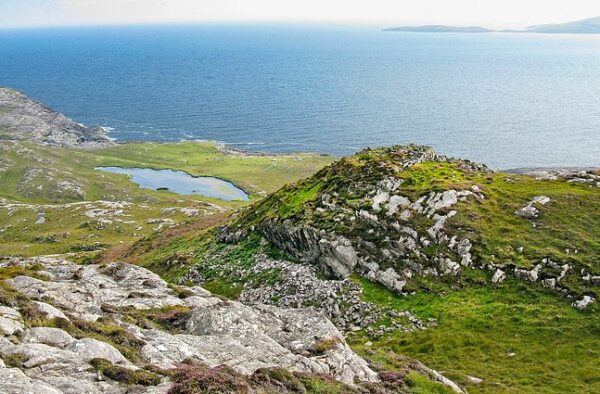
By April, the landscape itself is changing daily. Birch, rowan and willow begin to show fresh green leaves, while gorse and early wildflowers add colour to hillsides and verges. The machair starts to awaken, hinting at the floral richness to come in early summer.
This fresh growth provides vital food for herbivores and shelter for nesting birds, making April a crucial foundation month for the season ahead.
Coastal Mammals: Otters and Seals
The coastlines of Mull, Islay and Jura are superb places to watch Otters, particularly in calmer spring conditions. April offers excellent chances of daytime sightings, as otters forage along kelp beds and rocky shores, often accompanied by cubs from earlier litters.
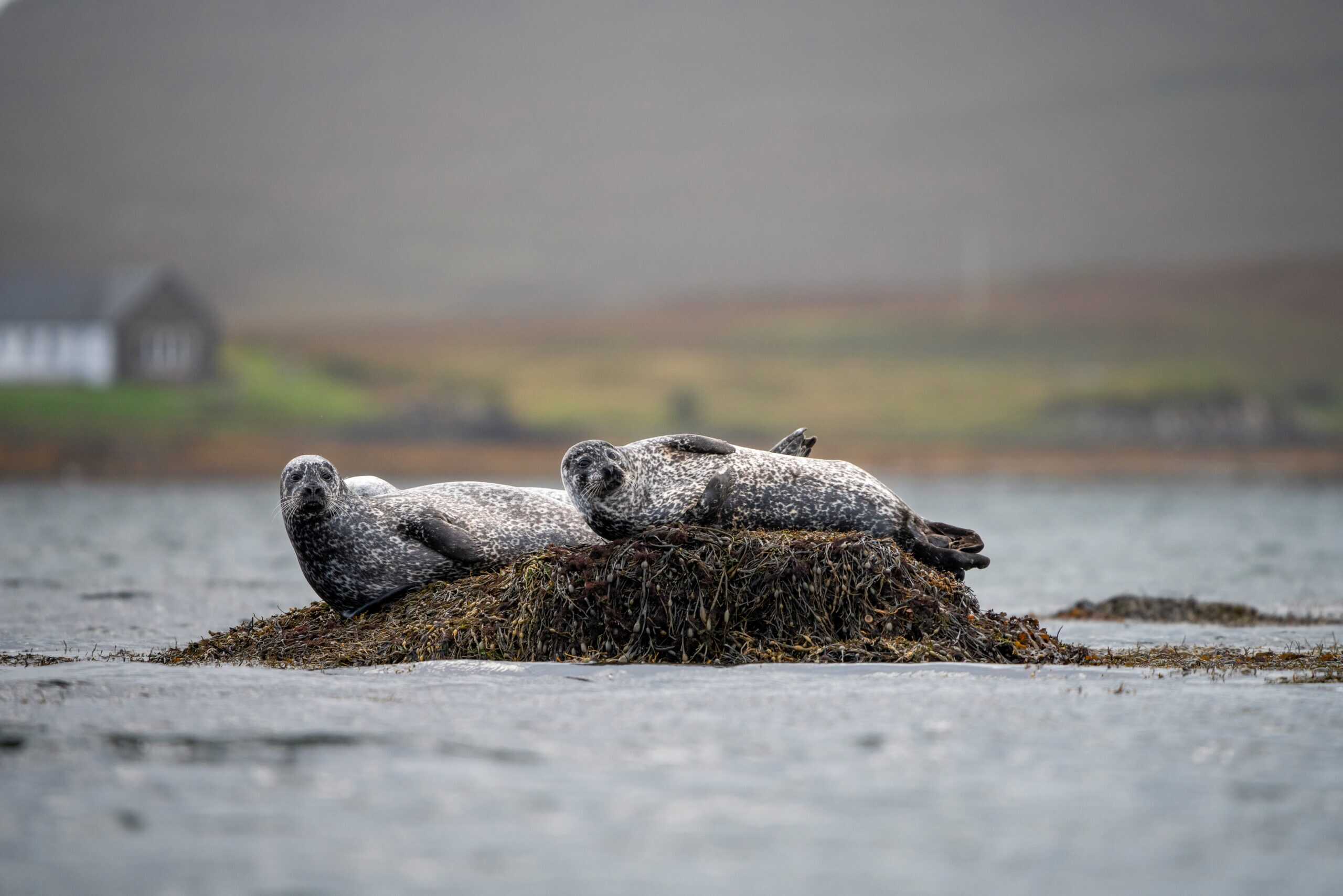
Grey and Common Seals are regularly seen hauled out on skerries and beaches, resting between feeding trips. While the main pupping seasons are past, spring is a relaxed time to observe natural behaviour without the intensity of winter storms.
Red Deer: Changing Seasons
In the glens and open hills, Red Deer are shedding their winter coats. Stags begin to grow new antlers, still covered in soft velvet, while hinds and last year’s calves take advantage of the improving grazing. On Jura, in particular, deer remain an iconic part of the landscape, often silhouetted against the sea or distant hills.
A Month of Promise
April on Scotland’s west coast is a time of promise rather than abundance. Not everything has arrived, and the full chorus of summer is still to come, but that sense of anticipation is what makes this month so special. From displaying eagles to budding trees and returning birds, the islands feel poised on the edge of the season — alive, alert and full of potential.
For wildlife watchers, photographers and anyone who enjoys the quiet unfolding of nature, April is one of the most rewarding times to be here.
Experiencing It First-Hand
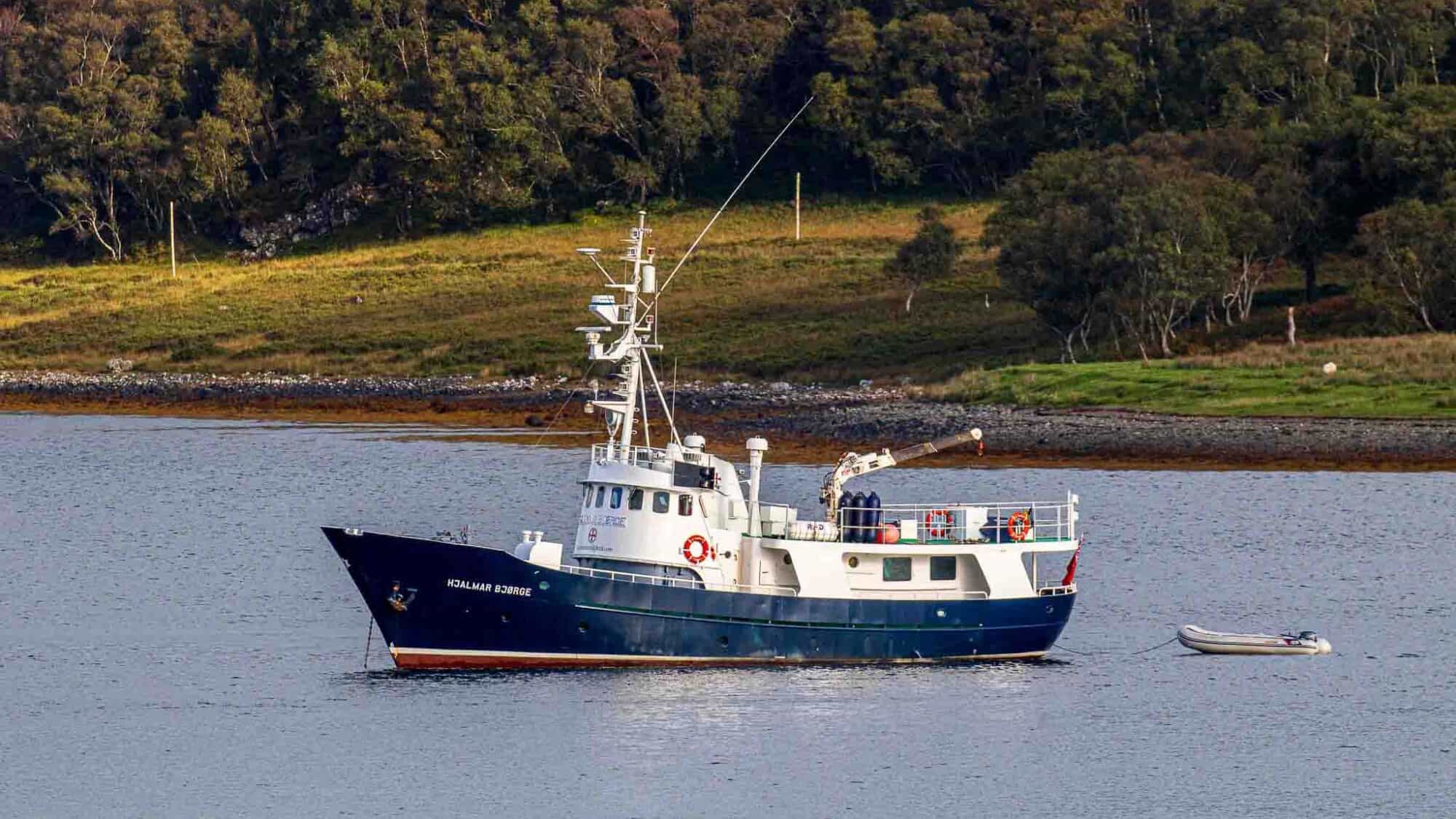
All of this fantastic wildlife is regularly encountered from our micro expedition ship, Hjalmar Bjørge as we sail between and around the islands, or discovered during time ashore on walks. Whether scanning sea lochs for eagles and otters from the deck, or exploring shoreline, woodland and hill lochs on foot, the combination of boat-based and land-based exploration offers a uniquely immersive way to experience spring on Scotland’s west coast.